Marriage of Rosemary and Guy Woodhouse
Rosemary's BabyThe marriage of Rosemary Woodhouse and Guy Woodhouse is shaped by a widening divide between shared domestic hopes and unequal control over their future. They begin as partners who have long wanted a home at The Bramford and imagine a family together, but their differing readiness for parenthood turns that shared future into a private contest. Later, when Rosemary questions whether she can trust Guy, the marriage’s promise of openness collides with her growing sense that she must protect herself without him.
Shared Home and Domestic Life
Rosemary and Guy had been on the waiting list for an apartment at The Bramford since their marriage. When they had already signed a lease elsewhere, the news that a four-room apartment had become available still mattered enough for Rosemary to ask whether they could undo their commitment. Their eventual home was thus bound to a shared aspiration, though the apartment’s size and age differed from the five-room place they had first leased.
The Bramford also places the couple’s private life beside the Castevets’ household. Sounds from the neighboring apartment and its gatherings enter Rosemary and Guy’s nights, while the building’s basement becomes part of Rosemary’s routine: she goes down every few days to do the laundry. There, the service elevator and passageways unsettle her, and she remembers Hutch’s warnings. The home they chose for its appeal is therefore also a setting in which ordinary domestic life is shadowed by unease.
Conflicting Hopes for Parenthood
Rosemary is twenty-four and wants three children, spaced two years apart. Guy says he is not ready, and she fears that his readiness will depend on a level of professional success he has not yet attained. She privately hopes to become pregnant by accident; she dislikes the alternatives she has considered, while Guy studies the calendar and avoids the days he believes are dangerous. Their disagreement is not openly negotiated as a shared decision. Rosemary conceals her intentions, and Guy’s efforts to avoid pregnancy proceed without his knowing that she is trying to conceive.
When her period arrives, Rosemary feels that she has lost again in a contest Guy does not know is taking place. The episode makes the imbalance in their communication concrete: each is acting on a different understanding of their future, and neither has brought the disagreement fully into the open. Her desire for a child is sincere, but the secrecy surrounding it leaves the marriage without a mutually acknowledged decision.
Conception and a Crisis of Trust
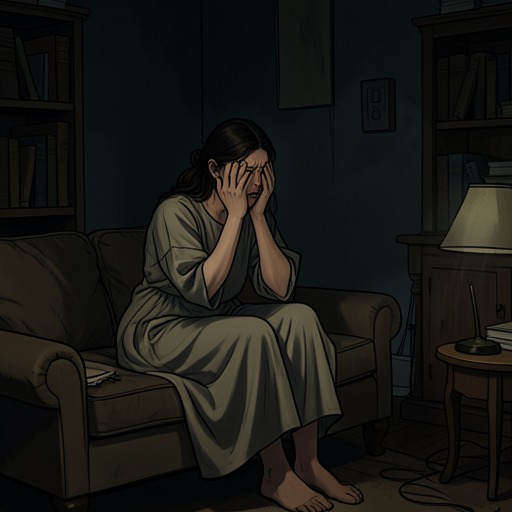
After the night Guy treats as an attempt to make a baby, Rosemary is troubled less by whether she may be pregnant than by what the encounter means between them. She recognizes that Guy acted without her knowledge and feels that he treated her as a body rather than as a whole person. She also recalls the incident as physically painful and frightening. Her response turns the question of conception into a question of intimacy: she wonders whether Guy’s stated love matches what he actually feels.
Looking back, Rosemary sees signs she may have overlooked and reflects on the difficulty of knowing when an actor is being genuine. That suspicion connects Guy’s profession to her uncertainty about their marriage. Even though she recognizes that he wanted a child and had also been drinking, those circumstances do not resolve her sense of having been excluded from what happened. The possibility of pregnancy therefore arrives alongside a serious loss of confidence in her husband.
An Attempt at Openness
When Rosemary and Guy later talk, she proposes beginning again through greater openness. She explains that she went to Hutch’s cabin near Brewster to understand what was wrong between them and identifies their lack of honest communication as the central problem, on both sides. Guy agrees that he has been self-centered and says he will try to make his love clearer. Their exchange briefly restores the language of mutual responsibility: Rosemary does not assign the whole failure to him, and Guy acknowledges a part in it.
Guy then wants to tell Minnie Castevet and Roman Castevet that they are trying to have a child. Rosemary agrees. Watching him, she understands that the older couple have become deeply important to him, in part because he lacked a truly fatherly relationship with his own fathers. She sees the Castevets as filling a need in him and feels grateful to them. Her interpretation gives the attempted reconciliation a wider context: she is trying to understand Guy’s attachments as well as repair their own relationship.
Isolation and the Hidden Passage
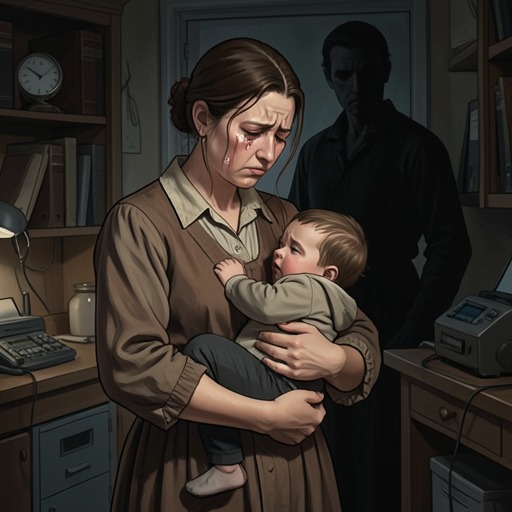
That renewed openness does not last as a reliable basis for trust. When Rosemary later decides to reach her child herself, she resolves not to ask anyone to save her. She believes Guy’s acting ability and Abraham Sapirstein’s standing as a doctor would make others suspect that she was unwell after losing the baby. Her decision is not simply to leave Guy out of a particular conversation; she expects that he could shape how others interpret her, and she chooses to proceed alone.
Rosemary also believes she has discovered a secret route between the two apartments. The entrance is concealed behind the shelves in the linen closet she had arranged in her own home. After noticing that the closet’s contents have been rearranged, she finds a painted panel that opens into another closet and reaches the Castevets’ hallway. She enters carrying a kitchen knife, but the hallway is empty and there is no crib or baby in view. The concealed passage makes the couple’s domestic setting part of the marriage’s crisis: a home once chosen together now contains an unseen route that Rosemary must investigate without Guy’s help.
Significance
The marriage’s central change is from an imagined partnership in which a home and family are shared goals to a relationship in which Rosemary doubts whether her husband can be trusted with her account of events. Their disagreement over when to have children begins in silence; even their attempt to name the problem as a lack of openness cannot secure lasting trust. The contrast between their early, joint pursuit of an apartment and Rosemary’s later solitary passage through the hidden door gives that change a physical shape. By the time she acts alone, the marriage’s most consequential question is no longer simply whether they will become parents, but whether Rosemary can rely on Guy to recognize and believe her.